Home › Commercial Concrete Foundations and Footings
We install commercial concrete foundations and footings in Birmingham, AL for retail, industrial, and multi family projects. Our team executes plans for spread footings, grade beams, and structural slabs with precise layout and reinforcement. We coordinate with engineers and site supervisors to meet specifications and timelines.
Birmingham Concreters provides professional commercial concrete foundations throughout Birmingham, AL, Alabama and the surrounding area. Our licensed, insured crew delivers safe, clean, on-time work with a free estimate before anything begins. Call (205) 941-6235 or request your free quote.
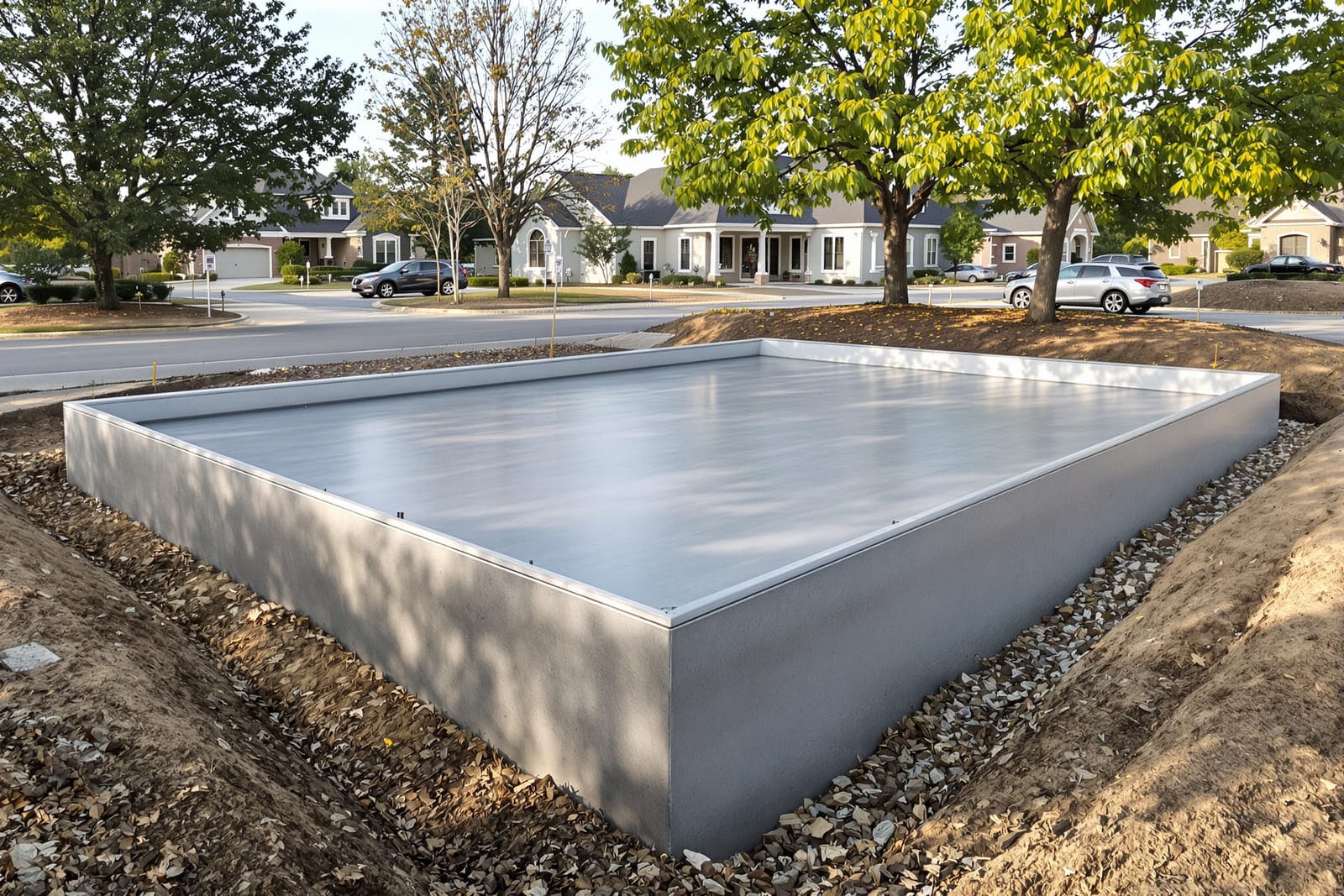
Commercial Concrete Foundations in Birmingham, AL
If your project in Birmingham needs a commercial concrete foundation, you are making a long-term decision that affects everything built on top of it. At Birmingham Concreters, we focus on foundations and footings that are matched to local soil, local codes, and the real-world loads of your building, not just a stock plan off a shelf.
Commercial concrete foundations typically fall into a few categories: slab-on-grade, thickened edge slabs, spread footings with stem walls, and deep foundations that use piers or caissons to reach more stable bearing layers. In central Alabama, we often see variable clay content and pockets of soft soil, so we rarely assume a basic slab will be enough. We look at the building type, column layout, anticipated equipment loads, and any geotechnical report before we suggest a design.
A well-built commercial foundation is more than just thickness and strength. We control joint layout to manage shrinkage cracking, specify rebar size and spacing to match actual loads, and coordinate anchor bolt locations with steel or wood framing plans. That attention up front is what keeps you from fighting slab movement, door misalignment, or cracked tilt-wall panels a few years down the road. Our goal is a foundation that quietly does its job for decades.
How We Plan and Design Your Foundation and Footings
Before any concrete truck shows up, Birmingham Concreters invests time in planning. First, we review your structural drawings and any soil report. If you do not have a geotechnical report yet, we will tell you whether it is truly needed based on building size, use, and known local soil conditions. For many light commercial projects in Birmingham, a basic soil test and known bearing capacities are enough. For heavier structures, multistory buildings, or equipment foundations, a full geotech report is usually worth the cost.
Next, we walk the site. We look at elevation changes, drainage paths, nearby trees that might impact future moisture in the soil, and any existing structures or utilities. In parts of Birmingham with older fills, we may probe for undocumented buried debris that can affect footing performance. These small checks help us avoid surprises once excavation starts.
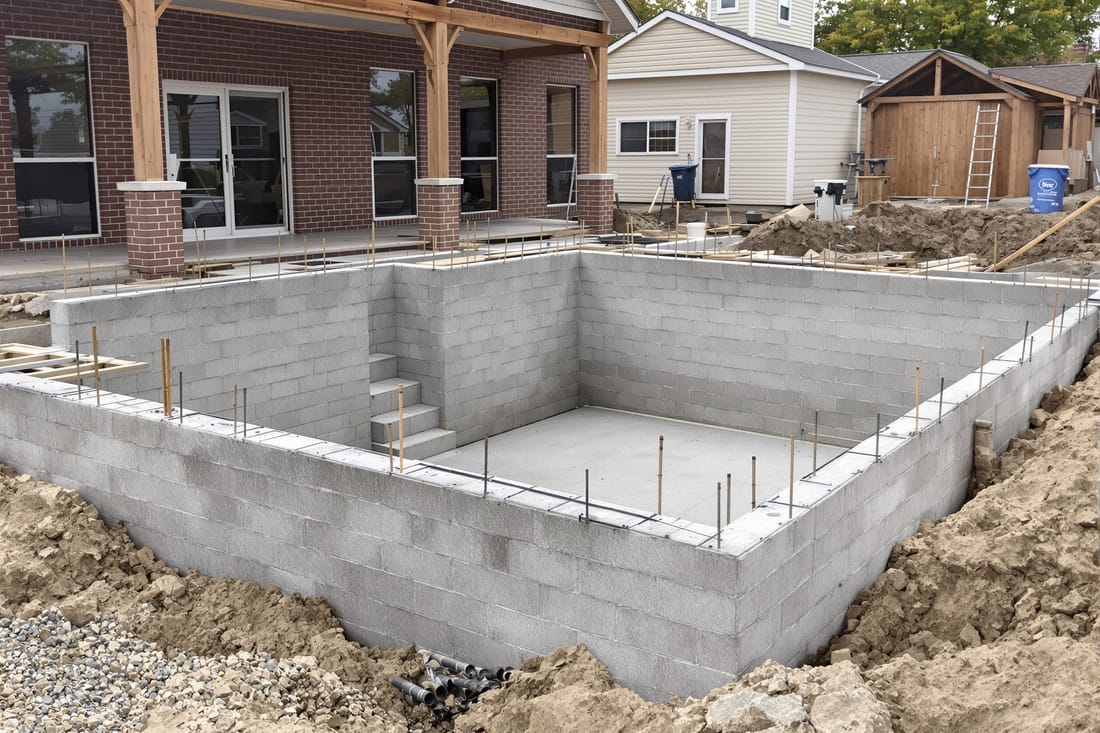
We then confirm foundation type, footing width and depth, and reinforcement. For shallow foundations, we may use continuous strip footings under load-bearing walls and isolated spread footings under columns, all tied to a slab-on-grade. For heavy point loads or poor surface soils, we may recommend deeper piers, drilled to more stable material. We also coordinate with you on practical issues like where to place thickened slabs for machinery pads or coolers, and how to detail vapor barriers if you are planning polished concrete floors or sensitive interior finishes.
Scheduling is also part of design. In Birmingham, the most predictable months for foundation work are typically October through April, when extreme heat is less likely to flash-set concrete. Summer work is common too, but we adjust mix design, placement times, and curing methods to keep quality consistent.
Step-by-Step: From Excavation to Finished Concrete
Commercial concrete foundations and footings follow a clear sequence when done correctly. Birmingham Concreters keeps you informed at each step so you always know what is happening on your site.
1) Layout and excavation. We start by staking out footing lines and slab boundaries based on your survey and drawings. Using a laser level, we set benchmark elevations so cut and fill can be done accurately. Footings are excavated to the specified depth and width, then we proof-roll or probe the subgrade to confirm it is firm and uniform. If we encounter soft spots or unsuitable soil, we either undercut and replace with compacted stone or adjust the design in coordination with your engineer.
2) Sub-base and formwork. For slabs, we typically install a compacted crushed stone base to improve drainage and support. In Birmingham, where heavy rains can saturate topsoil, this base layer is important for long-term slab performance. Forms are built for footings, grade beams, and slab edges, with attention to straight lines, correct elevations, and proper bracing so nothing moves during the pour.
3) Reinforcement and embeds. We place rebar cages in footings and grade beams, tie slab reinforcement, and install any mesh or fiber requirements per the plans. Anchor bolts, column base plates, electrical conduits, plumbing sleeves, and other embeds are set at this stage. This is where coordination with your steel fabricator, plumber, and electrician is critical. Once the concrete is in, these items are very hard to move, so we double-check measurements before we pour.
4) Concrete placement and finishing. We choose a mix that fits your project, which may be 3,000 to 5,000 psi concrete, often with air entrainment and sometimes with admixtures for set control in hot weather. Concrete is discharged, vibrated to remove air pockets, and struck off to the right elevation. For slabs, we bull float, edge, and then machine finish or trowel finish, depending on the specified surface. Control joints are cut on a layout designed to manage cracking around column lines and high-stress areas.
5) Curing and early protection. After finishing, we apply curing compound or use wet curing methods as required. In hot Alabama summers, we may use evaporation reducers or shade scheduling to avoid rapid moisture loss that can cause surface issues. We restrict traffic until the concrete reaches enough strength to support loads, typically following engineer or manufacturer guidelines rather than guesswork.
Costs, Common Issues, and How We Prevent Problems
Costs for commercial concrete foundations in Birmingham depend on several real factors, not just a price per square foot. The biggest drivers are excavation depth, footing width, amount and size of rebar, concrete strength and thickness, access for trucks and equipment, and the level of coordination needed for embeds or specialty items. A building that looks simple on paper can become more expensive if soil conditions are poor or if the design requires many isolated piers or heavy reinforcement.
One of the more common cost surprises is unsuitable soil. If we dig for footings and find soft or organic material, the bearing capacity is lower than the design assumed. We handle this by either over-excavating and replacing with compacted stone or by working with your engineer to adjust footing sizes or depths. Addressing it correctly during construction is far cheaper than dealing with settlement later.
Another issue we see in Birmingham is water. Heavy rains can flood open excavations, soften the subgrade, and make it hard to keep forms in place. Birmingham Concreters plans pours around forecast when possible, has pumps on hand when needed, and uses proper site grading and temporary swales to move water away from the foundation area during construction. We also consider long-term drainage, such as footing drains or site grading that directs surface water away from the building.
Cracking is often misunderstood. All concrete cracks to some extent, but uncontrolled cracking and differential settlement are what cause trouble. We minimize these problems with proper joint spacing, adequate reinforcement, consistent subgrade preparation, and realistic expectations about curing and loading. For industrial or warehouse projects with heavy forklift traffic or racking loads, we may suggest dowelled joints and thicker slab sections in travel aisles or high-load areas to avoid joint breakdown later.
Finally, rework caused by misplaced anchor bolts or sleeves can be expensive. We control this by pre-pour checks with printed layouts, laser measurements, and coordination with your steel and mechanical contractors. Catching a misaligned bolt pattern before the concrete hardens can save days of field fixes.
What Birmingham Owners and GCs Should Know Before Hiring
If you are an owner, developer, or general contractor in Birmingham, there are a few things to nail down before you choose a contractor for commercial concrete foundations. First, confirm that your contractor actually reads and follows structural plans and does not just estimate by square footage. Ask how they verify rebar placement, footing depths, and anchor bolt locations. At Birmingham Concreters, we document these items with inspections and, when needed, photos for your records.
Second, talk about schedule in realistic terms. Concrete foundations depend on more than just crew availability. Site readiness, underground plumbing and electrical, and inspection timing all matter. In Jefferson County and surrounding jurisdictions, inspection schedules can affect pour dates, so we coordinate early with inspectors to keep your timeline on track. We also discuss phasing options, for example, pouring footings and grade beams first, then returning for slab pours once walls or utilities are ready.
Third, review mix designs and testing. For many commercial projects, cylinder tests or field tests are required to verify strength. We work with local ready-mix suppliers who know Birmingham conditions and can provide the right mixes and test data. If your lender or insurer requires specific documentation, we can incorporate that into the project plan.
It also helps to ask how your contractor plans to protect adjacent businesses, sidewalks, and streets. Commercial sites in Birmingham can be tight, especially in more developed areas. We plan access routes for trucks, set up washout areas, and protect existing pavements and neighboring properties so you do not end up with damage claims.
If you want a foundation that matches the reality of your site, local soil, and schedule, and not just a generic design, Birmingham Concreters is set up for that kind of work. We focus on planning, communication, and solid field execution so your building starts on the right footing.