Home › Commercial Concrete Sealing and Coatings
We apply commercial concrete sealing and coatings in Birmingham, AL to protect floors, docks, and exterior slabs. Our systems range from penetrating sealers to high performance coatings for chemical and traffic resistance. We prepare surfaces correctly and schedule work to limit downtime for your operation.
Birmingham Concreters provides professional commercial concrete sealing throughout Birmingham, AL, Alabama and the surrounding area. Our licensed, insured crew delivers safe, clean, on-time work with a free estimate before anything begins. Call (205) 941-6235 or request your free quote.
Commercial Concrete Sealing for Birmingham Facilities
Commercial concrete in Birmingham works hard. Parking lots bake in August heat, warehouse floors see forklift traffic all day, and entry walks deal with constant foot traffic plus surprise ice events. Without proper commercial concrete sealing, those surfaces break down years earlier than they should.
Birmingham Concreters focuses on practical, durable commercial concrete sealing and coatings for businesses across Jefferson and Shelby counties. We do not offer one single product for everyone. We match the sealer or coating to how the concrete is used: light retail traffic, heavy industrial loading, food service sanitation needs, or outdoor exposure. The goal is simple. Keep your concrete from absorbing water and chemicals, make it easier to clean, and cut your long term repair costs.
When we visit your site, we look for specific Birmingham issues: red clay staining at curb lines, tire tracking in parking garages, surface scaling from the occasional freeze, and damage from de-icers used on sidewalks during winter storms. Those details determine whether you need a breathable penetrating sealer, a high build coating, or a combination system. We also factor in local slip resistance expectations for public areas, so your surface is protected but still safe when it rains.
Types of Commercial Concrete Sealers and Coatings We Use
Businesses in Birmingham usually fall into a few categories that call for different commercial concrete sealing approaches.
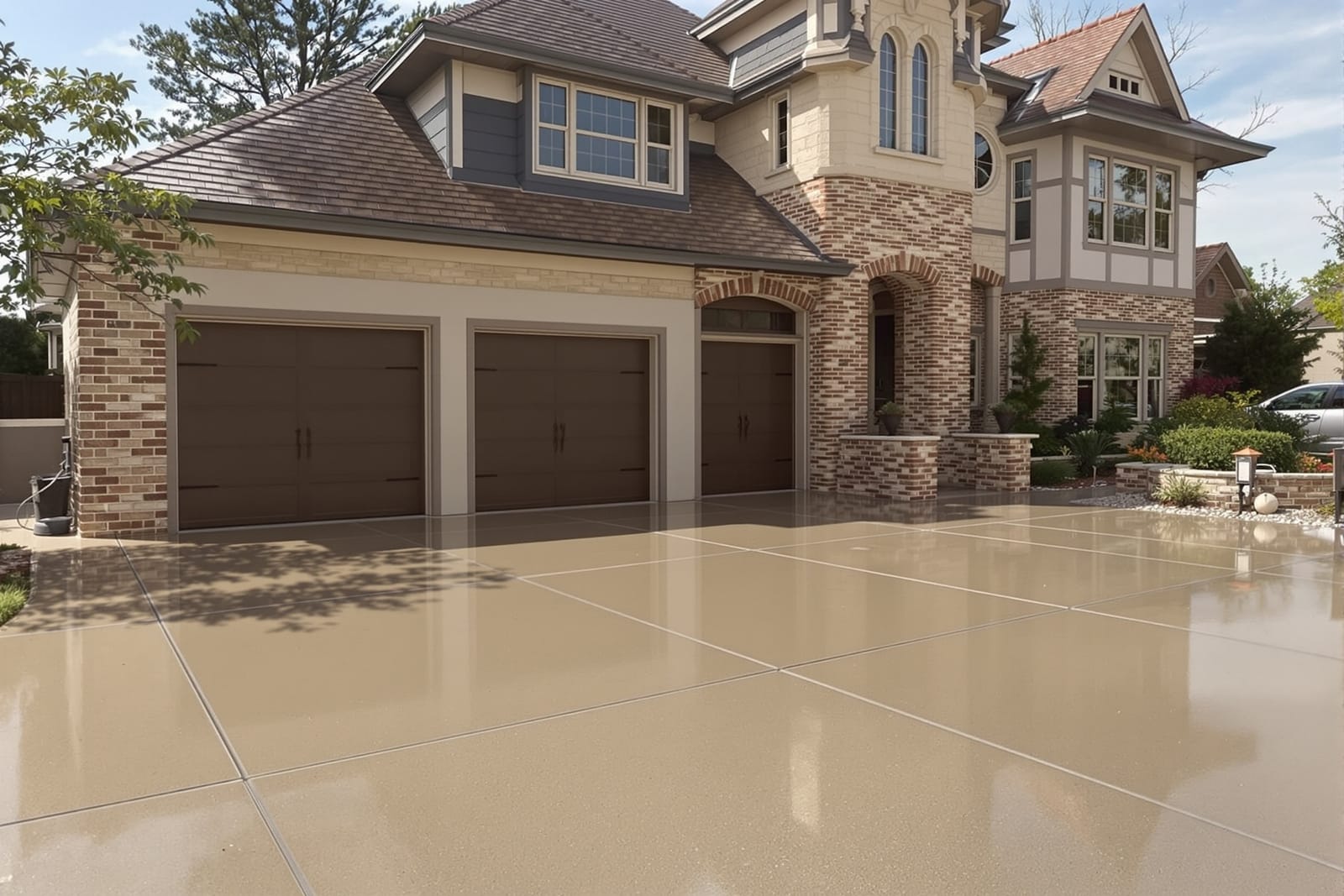
Penetrating sealers (silane, siloxane, and blended products) are common for exterior flatwork like parking lots, sidewalks, loading docks, dumpster pads, and drive lanes. They soak into the concrete and reduce water and salt absorption without leaving a thick film on top. These are a good fit for properties along Highway 280, I-65, or downtown where you get constant vehicle traffic and occasional de-icer use on ramps and walks.
Film forming sealers (acrylics and polyurethanes) provide a visible finish and can deepen color on stamped or stained surfaces. We often use non yellowing acrylics at retail plazas, restaurant patios, and decorative walkways. For commercial work we usually specify low gloss or satin products to avoid a slick appearance and to stay within reasonable slip resistance.
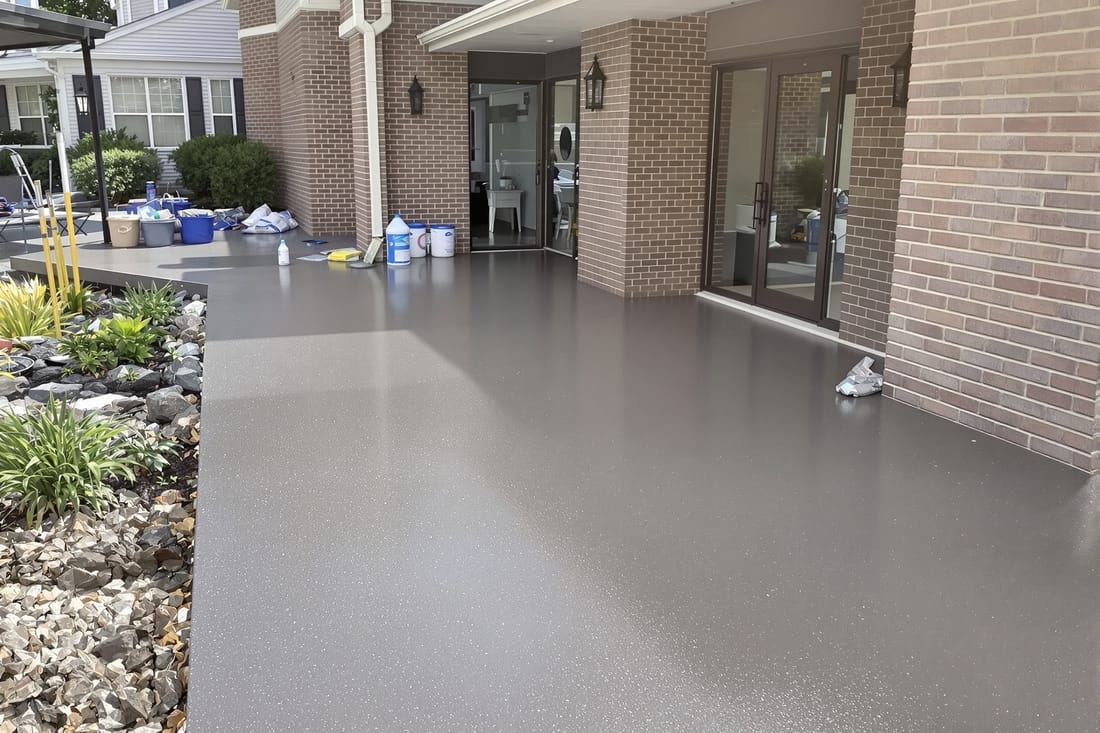
High performance coatings (epoxy, urethane, and polyaspartic systems) come into play on interior floors that see heavy use. That includes warehouses, fire stations, auto shops, manufacturing plants, aircraft hangars, and food processing areas. We can build these systems with solid color, light reflective coatings for safety and visibility, or add broadcast quartz or flake for slip resistance and easier cleaning. Where chemicals or oils are present, we choose products rated for that exposure and provide the data sheets so your safety team can review them.
For some Birmingham projects we design hybrid systems, for example a penetrating sealer on exterior loading ramps combined with a thick build epoxy inside the roll up doors. This prevents a hard edge at the threshold and reduces trip hazards.
Our Commercial Concrete Sealing Process, Step by Step
Real commercial concrete sealing is less about rolling on product and more about preparation. Birmingham Concreters follows a clear process so what we install actually lasts.
1) Site walk and testing. We check the age and condition of the concrete, moisture levels, and any existing coatings. On older properties in areas like Avondale or the industrial sections of Ensley, we often find multiple layers of previous sealer or paint. We perform adhesion and porosity tests to see what the surface will accept.
2) Cleaning and surface prep. For exterior flatwork we use commercial grade pressure washing combined with degreasers to remove oil, hydraulic fluid, and tire residue. Dumpster pads may require hot water washing and specific cleaners to cut animal fats and food waste. Interior floors are mechanically prepped with grinding or shot blasting to create the correct surface profile for epoxy and polyurethane coatings.
3) Repairs. We route and fill cracks, patch spalls, and treat joint damage before applying sealer. On warehouse floors we often rebuild control joints with semi rigid epoxy so forklift wheels do not keep chipping the edges. On parking lots we address surface scaling and pop outs so the sealed surface is even and drains correctly.
4) Product selection and mockup. For large or sensitive areas, such as hospitals, schools, or distribution centers serving the Birmingham metro, we can install a small test area so your team can see the appearance and test slip resistance before we proceed across the entire floor.
5) Installation. We apply commercial concrete sealing products using sprayers, rollers, or squeegee and back roll methods, depending on the system. With high build coatings we install in multiple lifts, allowing proper cure times between coats. We manage wet edge timing carefully to avoid lap marks and uneven sheen.
6) Curing, return to service, and documentation. We schedule work around your operations so high traffic areas can be opened as soon as product data allows. For example, some fast cure systems let light foot traffic in 4 to 6 hours and forklift traffic in 24 hours. You receive product info, maintenance guidance, and recoat timing estimates so you can plan future budget cycles.
Cost Drivers and Scheduling for Birmingham Businesses
Commercial concrete sealing costs in Birmingham are driven less by square footage and more by what it takes to get the surface ready and which system makes sense for your use.
Key cost factors include:
• Surface condition. Clean, relatively new concrete in a Trussville or Hoover retail center usually needs minimal prep, so a penetrating sealer may be very cost effective. Old, oil soaked floors in a mechanic shop near I-20 can require multiple degreasing cycles, mechanical prep, and thicker coatings, which naturally increases labor and material costs.
• Product type and thickness. Penetrating sealers and basic acrylics are on the lower end of cost per square foot and work well for many exterior areas. Multi coat epoxy and urethane systems with slip resistant aggregates or decorative flake are more expensive but are often justified in food, healthcare, or industrial environments where cleaning and durability are critical.
• Access and phasing. If we can treat a large warehouse in one continuous pass, the unit cost is lower than a hospital corridor project that must be done in small sections overnight. Projects that require off hour work, tight shutdown windows, or heavy equipment relocation will affect the final price, and we outline those line items clearly.
• Moisture and vapor issues. Certain parts of Birmingham have higher ground moisture. If tests show elevated vapor transmission, we might have to install a moisture mitigation primer or choose breathable systems. This avoids future blistering or delamination of coatings.
Birmingham Concreters builds schedules around your operations, not the other way around. For distribution centers, we often phase work by aisle so inventory can stay in place. For restaurants and retail, we typically work after closing and reopen walkways or dining patios before the next business day, using fast cure systems where appropriate.
Local Considerations: Weather, Safety, and Regulations
Birmingham’s climate plays a direct role in commercial concrete sealing. High humidity, sudden storms, and summer temps in the 90s can all affect how sealers and coatings cure. We watch the forecast closely and plan installation so products are not applied shortly before a downpour, especially on exterior flatwork and loading docks. We also avoid application on very hot surfaces, since that can cause bubbling or flash drying of film forming sealers.
Slip resistance is another local concern. Many Birmingham properties, from downtown office towers to neighborhood strip centers, have sloped walks and ADA ramps that can become slick in the rain. When we specify commercial concrete sealing for these areas, we integrate fine aggregates or use products with built in texture to meet practical slip resistance levels while still allowing the surface to be cleaned.
From a regulatory standpoint, most concrete sealing work in Birmingham does not require a building permit, since it is generally classified as maintenance rather than structural alteration. However, work on public facing entries and any modifications to striping or accessible routes must respect ADA slope and detectable warning requirements. If your project involves changing markings or reconfiguring accessible parking or walk routes, we can coordinate with your civil or property manager to keep those details compliant.
We also pay attention to product VOC limits and ventilation on interior projects, especially in healthcare, education, and food production spaces. Where needed, we can use low odor, low VOC systems and schedule work for times when occupants are minimal, then use air movement to clear the area before staff or the public returns.
What Birmingham Concreters Delivers After the Seal is Dry
The value of commercial concrete sealing is measured months and years after install, not the day we pack up our equipment. Birmingham Concreters aims for coatings and sealers that still look and perform acceptably after thousands of vehicle passes, repeated cleanings, and temperature swings.
On completion, we walk the site with you and point out exactly what was sealed or coated, where joints were repaired, and any areas that may need closer observation over time. You get maintenance tips that match your actual operations. For example, we advise auto shops on which degreasers will not prematurely dull their floor coating, and we show restaurant managers how to avoid pooling water under portable mats that can stain even sealed concrete.
We also provide realistic recoat timelines instead of vague promises. Exterior penetrating sealers in Birmingham conditions typically need reapplication every 3 to 5 years, depending on traffic and exposure. High build epoxy and urethane floors might need selective touch ups in high wear lanes while the rest of the floor stays intact. Planning for this in your capital budget often costs less than waiting until the surface is badly damaged.
If you manage multiple properties across the Birmingham metro, we can standardize systems so sidewalks, entries, and interior service areas at each site can be maintained and recoated with predictable materials and schedules. This consistency helps your facilities team and keeps your risk profile more manageable.